Avoid hidden charges in Shadwell rubbish removal quotes
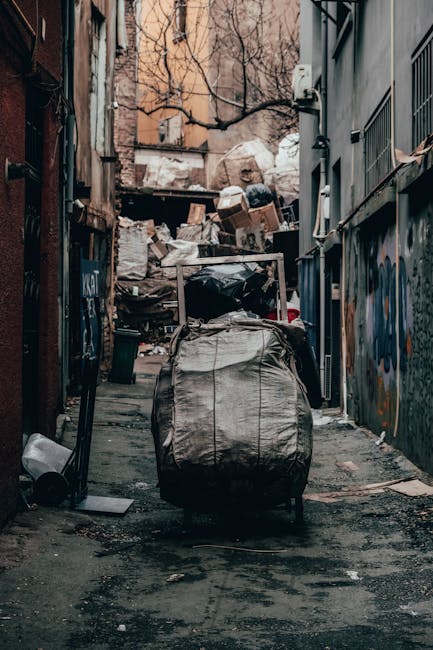
If you have ever compared rubbish removal prices and thought, "That looks fair enough," only to see the final bill creep up later, you are not alone. Hidden extras can turn a simple clearance into an irritating expense very quickly. This guide on how to avoid hidden charges in Shadwell rubbish removal quotes will help you spot the warning signs, ask the right questions, and choose a service with confidence rather than crossed fingers.
In a busy part of East London like Shadwell, where flats, shops, offices, and building jobs all generate different kinds of waste, quote structures can vary more than you might expect. The good news? A transparent quote is not hard to recognise once you know what to look for. And once you do, the whole process becomes a lot calmer. Less guesswork. Less stress. Fewer surprises on the day.
Below, we break down how rubbish removal quotes are usually built, where hidden fees tend to appear, and the practical checks that can save you money. We will also cover useful service pages such as pricing and quotes, payment and security, and terms and conditions so you know where the fine print usually lives.
Quick takeaway: the best protection against hidden charges is clarity before booking. If a company cannot explain what is included, what is not, and what could change the price, that is your cue to slow down.
Why avoiding hidden charges in Shadwell rubbish removal quotes matters
Let's face it: nobody likes paying more than they expected, especially for a job that seemed straightforward. Hidden charges are not just annoying. They can distort your comparison shopping and make a cheap-looking quote far more expensive than a transparent one.
This matters even more in Shadwell because the local mix of properties can create awkward access issues. A top-floor flat with no lift, a narrow street with limited parking, a basement office with awkward stairs, or a last-minute pile of builders' waste from a renovation can all influence the final cost. That is fair enough if it is explained properly. It becomes a problem when the price changes after the van has already arrived.
Hidden charges also make it harder to compare providers properly. One company may quote low and add fees later. Another may quote slightly higher but include labour, loading, and disposal in one clear figure. The second option is often better value, even if it looks dearer at first glance.
Expert summary: A trustworthy quote should tell you what is included, what will cost extra, and under what conditions the price can change. If any of that is vague, ask for clarification before you book.
There is also a trust angle here. Rubbish removal often happens during life's messier moments: a house move, a tenancy change, an office clear-out, a building job that ran over, or that Saturday when the garage finally wins the battle. In those moments, you need a service that feels steady, not slippery.
If you want to see how a transparent provider frames its service, the about us page can be useful for understanding the company behind the quote, while insurance and safety shows another layer of reassurance.
How avoiding hidden charges in Shadwell rubbish removal quotes works
The process is simpler than people often think. A proper quote should be based on a few core details: the type of waste, the volume, the weight or density if relevant, access conditions, labour requirements, and any special handling needs. Once those points are clear, there should be less room for "unexpected" extras.
Most hidden charges appear when one or more of those details is unclear. For example, a company may advertise a base price, then add:
- extra labour for difficult access
- charges for bulky or heavy items
- fees for stair carries or long carrying distances
- additional disposal costs for certain materials
- surcharges for same-day or out-of-hours collection
- fees for items that were not disclosed in the original quote
That does not automatically mean the provider is unreliable. Sometimes the issue is just poor communication. But if the quote is being used as a sales hook rather than a genuine estimate, you may end up paying more than planned.
A cleaner way to think about it is this: a quote should be a promise with conditions, not a vague starting point. If you have a pile of mixed junk in a Shadwell flat, the company should ask enough questions to make the estimate realistic. If they do not ask much at all, that should make you pause. A proper assessment, even a quick one, usually saves hassle later.
For waste types that often trigger extra cost, it helps to check the relevant service page in advance. For example, furniture jobs may fit better with furniture clearance or furniture disposal, while sofa or mattress items may need more specific handling through mattress and sofa disposal.
Key benefits and practical advantages
Transparent rubbish removal pricing does more than protect your wallet. It makes the whole job easier to manage from start to finish.
- Better budget control: you can plan costs with less guesswork.
- Cleaner comparisons: you can compare quote to quote on equal terms.
- Fewer day-of surprises: no awkward "just one more fee" conversation at the kerb.
- Faster decisions: clear pricing speeds up booking.
- Less back-and-forth: fewer calls, fewer emails, fewer corrections.
- More confidence: you know what is covered before the team arrives.
There is a practical advantage too: a properly scoped quote tends to lead to a smoother collection. The team knows what tools, time, and vehicle space they need. You know what to expect. It is a small thing, but on a busy morning it can save a lot of faff.
This is particularly helpful for larger or more varied jobs. A clearance involving a loft, garage, or garden often includes mixed waste and access challenges. In those cases, pages like loft clearance, garage clearance, or garden clearance can help you think through what kind of service you actually need.
Who this is for and when it makes sense
This topic matters to just about anyone booking rubbish removal in Shadwell, but especially if you are dealing with one of these situations:
- you are comparing several quotes and want a fair like-for-like comparison
- you are clearing a flat, office, or house and the waste is a mix of different items
- you have bulky furniture, appliances, or awkward access
- you are managing builders' waste after a renovation or repair
- you need a quick collection but still want price certainty
- you have been caught out by hidden extras before and do not want that again
For tenants and landlords, clarity matters because timings are tight and budgets are usually already stretched. For small businesses, hidden charges can upset a tidy admin process. For homeowners, they can spoil the relief of finally getting a cluttered space back.
If you are clearing a whole property, you may find it useful to look at house clearance, home clearance, or flat clearance rather than a generic rubbish collection. The more accurately the service matches the job, the less likely extra costs are to creep in.
To be fair, some jobs are just messy. A half-cleared room, a broken wardrobe, two black bags, and a sagging sofa by the door can look simple enough - until someone realises the building has no lift and the van is parked a street away. That is why upfront detail is worth its weight in tea and patience.
Step-by-step guidance
Here is a practical way to avoid hidden charges when asking for rubbish removal quotes in Shadwell.
- List everything you want removed. Be specific. "Old furniture" is less useful than "one wardrobe, one bed frame, one mattress, and three bags of mixed waste."
- Note access conditions. Mention stairs, lifts, parking restrictions, narrow hallways, timed loading bays, or long carrying distances.
- Separate special items. Fridges, appliances, hazardous materials, and confidential waste can require different handling. If needed, check fridge and appliance removal, hazardous waste disposal, or confidential shredding.
- Ask what the quote includes. Labour, loading, transport, disposal, and VAT should all be clear.
- Ask what could change the price. Get the triggers in writing if possible.
- Check timing rules. Same-day, weekend, or evening collections may cost more.
- Review the terms carefully. A brief read of the terms and conditions can reveal a lot.
- Confirm payment details. Make sure you understand when payment is taken and how it is processed through the provider's payment and security information.
- Keep the quote handy. If anything changes on the day, you will have a record of what was agreed.
If the company offers online booking, that can make things easier too, but only if the booking form captures enough detail. You can usually start with book online and still follow up with a clarifying message if needed. Sometimes a five-minute check saves a fifty-minute headache. Simple as that.
Expert tips for better results
Here are the habits that tend to separate a clean, fair quote from a frustrating one.
- Use photos, but do not rely on them alone. Photos help, especially for bulky waste, but always mention access details in words too.
- Ask for a price range if the job is uncertain. A good provider will explain the upper and lower ends.
- Be honest about volume. It is tempting to understate the pile. Don't. That usually backfires.
- Check if mixed waste changes the price. Builders' rubble, timber, furniture, and general rubbish are not always priced the same way.
- Confirm whether the quote is fixed. If it is estimated, ask what needs to stay the same for that price to hold.
- Compare more than the headline figure. A slightly higher quote with fewer exclusions can be better value.
- Ask about recycling and sorting. Responsible disposal can affect how waste is processed, and it is worth understanding the provider's approach via recycling and sustainability.
A small but useful tip: ask the company to restate the quote back to you in plain English. If they can do that without jargon, you are usually in safer hands. If they dodge the question or get oddly vague, that tells you something too.
Another one. Watch for the phrase "subject to inspection" without any explanation. That is not always a red flag, but it should come with a clear list of what the inspection might change. Otherwise, it is just fog.
Common mistakes to avoid
Most hidden-charge problems come from one of these mistakes.
- Choosing the cheapest headline price. The lowest number can be misleading if it excludes labour or disposal.
- Not mentioning access issues. Stairs, distance from the road, and parking restrictions matter more than people think.
- Assuming all waste is treated the same. Special items may need separate handling.
- Ignoring the small print. It is not exciting reading, but it is where many surprises live.
- Forgetting to ask about VAT. Some quotes are shown before tax, some after.
- Not checking cancellation or rescheduling terms. Life happens. Plans change. Fees can follow if you are not careful.
- Leaving items scattered around the property. If the crew has to search, sort, or move items farther than expected, extra work may be charged.
There is also a practical mistake people make when comparing services. They compare a specialist clearance against a broad, generic waste collection and expect the same pricing structure. That is rarely fair. For example, a business office clearance may suit office clearance or business waste removal, while a builders' job may need builders' waste clearance.
And yes, the classic mistake: "It's only a few items." Famous last words, right? A few bulky items can still take time, space, and lifting effort.
Tools, resources and recommendations
You do not need special software or a spreadsheet to avoid hidden charges, though a simple note on your phone helps. What you do need is a clear process.
- A photo set: take a few images of the waste from different angles.
- A quick inventory: write down item types and quantities.
- Access notes: include floor level, parking situation, lift availability, and any gate codes or restrictions.
- A comparison list: compare inclusions, exclusions, and likely extras, not just price.
- The terms page: read the provider's rules before confirming.
From a service-planning point of view, these pages can be useful depending on the job: waste removal for general clear-outs, garage clearance for storage spaces, and garden clearance when outdoor waste has built up after landscaping or pruning.
If you are booking for a property where privacy matters, it is also worth looking at confidential shredding. That can be especially useful for offices and landlords handling paperwork during a move-out or refresh.
A helpful recommendation, if you want the most reliable result, is to treat the quote stage like a mini audit. Not in a scary way. Just a calm check. What exactly is being removed? How far will it be carried? Are there special items? What might trigger a change? You would be surprised how many awkward disputes disappear when those questions are asked early.
Law, compliance and best practice
This topic touches on disposal responsibility, so a careful approach is sensible. In the UK, waste must be handled responsibly, and reputable operators should be able to explain how they manage it. You do not need to become an expert in waste law to avoid hidden charges, but you should expect clear communication, lawful disposal, and reasonable care with your property.
Best practice usually includes:
- clear written or recorded pricing terms
- honest descriptions of what is included
- appropriate handling of special waste types
- safe loading and removal methods
- transparent payment terms
- respect for access, neighbours, and shared spaces
For jobs with a safety angle, the provider should also be able to point to good working practices. That is where pages like health and safety policy and insurance and safety matter. They are not just admin pages. They show whether the company thinks carefully about risk, access, and handling.
If you are dealing with sensitive materials, hazardous items, or anything unusual, ask before booking. Do not assume it is okay. Better one slightly awkward question now than a much bigger issue later. That is just common sense, really.
Options, methods and comparison table
When it comes to clearing waste in Shadwell, you usually have a few broad options. Each can work well, but the right one depends on how much waste you have, how quickly you need it gone, and how much effort you want to spend organising it.
| Option | Best for | Pricing risk | Hidden charge risk | Notes |
|---|---|---|---|---|
| Pre-quoted rubbish removal | Most household and business clearances | Low to medium | Low if scoped well | Good balance of convenience and certainty |
| Estimated on-arrival quote | Jobs with uncertain volume | Medium | Medium to high | Useful, but ask how adjustments are calculated |
| Flat-rate collection | Simple, predictable loads | Low | Low | Best when waste type and volume are clear |
| Ad hoc same-day collection | Urgent clear-outs | Medium to high | Medium | Convenient, but check for urgency surcharges |
| Specialist disposal service | Appliances, hazardous items, sofas, mattresses | Low to medium | Low if disclosed | Often safer than forcing a general quote to fit |
The table above is not a hard rulebook, just a practical comparison. In real life, the best option is the one that matches your waste accurately. For example, a sofa and mattress clearance should not be treated like a pile of mixed household clutter, and a fridge should not be treated like a standard bag-and-box job. Matching service to waste is one of the easiest ways to avoid price creep.
Case study or real-world example
Here is a realistic example from the kind of job many people in Shadwell face.
A resident in a second-floor flat wants a wardrobe, a broken bed base, two small tables, and several bags of general rubbish removed before a tenancy inspection. The first quote sounds attractive, but it only covers the base vehicle charge. It does not include stair carrying, labour for bulky items, or disposal of mixed waste. By the time the crew arrives, the total has grown enough to make the customer wince.
Now compare that with a more transparent approach. The customer sends photos, explains the flat is up two flights of stairs, notes there is no lift, and mentions limited parking outside. The quote comes back with a clear breakdown: collection, labour, and likely disposal allowance. The price may be a little higher upfront, but the final bill is aligned with the original estimate. No awkwardness. No "we forgot to mention" moment. Just a job done properly.
This kind of experience is exactly why checking a provider's service pages matters. If the job includes larger furniture, it may make sense to review furniture clearance. If it is part of a wider property clear-out, house clearance or flat clearance may be a better fit. The right category gives the provider a better picture, and that usually means fewer surprises.
Truth be told, most quote disputes are not dramatic. They are just the result of missing details. A little clarity at the start tends to solve a lot.
Practical checklist
Use this before you accept any rubbish removal quote in Shadwell.
- Have I listed every item or waste type clearly?
- Have I mentioned stairs, lifts, parking, and distance from the road?
- Do I know whether labour is included?
- Do I know whether disposal is included?
- Have I checked for VAT or other taxes?
- Do I understand what could increase the price?
- Have I asked about special items such as fridges, mattresses, sofas, or hazardous waste?
- Have I read the terms and conditions?
- Do I know how payment works?
- Have I compared the quote with at least one other provider on the same basis?
If you can tick all ten, you are in a much better position. If not, pause and ask for the missing pieces. There is no prize for guessing.
And if you need to sense-check a provider's wider approach, pages like complaints procedure, about us, and payment and security can tell you a fair bit about how carefully they work.
Conclusion
Hidden charges are usually avoidable once you know where they hide: vague exclusions, unclear access assumptions, special-item surcharges, and loose wording around labour or disposal. The trick is not to chase the lowest number on the page. It is to ask for a quote that actually reflects your job.
In Shadwell, where properties and access conditions can vary so much from one street to the next, that extra bit of detail matters. A good rubbish removal quote should feel clear, fair, and calm. Nothing flashy. Nothing slippery. Just straightforward pricing that lets you get on with your day.
Take a moment, ask the practical questions, and trust your instincts. If the quote is easy to understand, it is usually a better sign than a bargain that needs decoding. And honestly, that peace of mind is worth a lot.
Get a free quote today and see how much you can save.
Frequently Asked Questions
What are hidden charges in rubbish removal quotes?
Hidden charges are extra costs that are not clearly explained before booking. They often include labour, access fees, disposal surcharges, or charges for special items.
How can I tell if a quote is genuinely fixed?
Ask what the price includes, what could change it, and whether the quote stays fixed if the job matches the details you provided. If the provider cannot answer clearly, treat the quote as incomplete.
Should I send photos before getting a quote?
Yes, photos help a lot, especially for bulky or mixed waste. They should be paired with written details about access, stairs, parking, and any special items.
Why do some rubbish removal quotes look much cheaper at first?
Sometimes the low price only covers the minimum call-out or a small base load. Labour, disposal, and access-related costs may be added later.
Do stairs always increase the price?
Not always, but many companies do factor in stair carries or difficult access. It depends on how the job is structured, so ask upfront.
Is it better to choose the cheapest quote?
Not necessarily. A transparent quote with fewer exclusions can be better value than a cheap-looking quote that adds extras later.
What waste items are most likely to attract extra fees?
Large appliances, fridges, mattresses, sofas, mixed builders' waste, confidential materials, and hazardous items are common examples.
Can I avoid hidden charges by reading the terms and conditions?
Yes, at least partly. The terms often explain exclusions, payment timing, cancellation rules, and any conditions that affect the final price.
What should I ask before booking a clearance in Shadwell?
Ask what is included, what could change the price, whether VAT is included, how access affects the quote, and whether special items need separate handling.
Do businesses and offices need different quote checks?
Usually, yes. Office and business clearances may involve confidential items, heavier loads, or tighter access windows, so it is wise to ask more detailed questions.
What is the safest way to compare multiple rubbish removal quotes?
Compare them on the same basis: same waste list, same access details, same timing, and the same question about what is included. Otherwise, you are not comparing like for like.
Where can I learn more about pricing before I book?
A good place to start is the provider's pricing and quote information, along with their payment and terms pages. Those sections usually explain the structure more clearly than a headline price ever will.