Revolutionizing Cardboard and Packaging Disposal for a Greener Future
Revolutionizing Cardboard and Packaging Disposal for a Greener Future
You know that moment when a delivery day turns your back room into a fortress of boxes? Tape crackling, cardboard dust in the air, someone muttering "we'll sort it later." We've all been there. Truth be told, the way we handle cardboard and packaging waste is changing fast--and for good reason. Costs are rising, regulations are tightening, and customers increasingly expect brands to act responsibly. The opportunity hiding in plain sight? To turn a messy expense into a neat, measurable source of savings, carbon cuts, and credibility.
This long-form guide dives into revolutionizing cardboard and packaging disposal for a greener future--with UK-focused advice, real numbers, and practical steps you can apply today. Whether you manage a London warehouse, a cafe in Manchester, a startup studio in Bristol, or simply want a better recycling setup at home, this is your playbook. Clean, clear, calm. That's the goal.
Table of Contents
- Why This Topic Matters
- Key Benefits
- Step-by-Step Guidance
- Expert Tips
- Common Mistakes to Avoid
- Case Study or Real-World Example
- Tools, Resources & Recommendations
- Law, Compliance or Industry Standards (UK-focused)
- Checklist
- Conclusion with CTA
- FAQ
Why This Topic Matters
In the UK, cardboard is a quiet workhorse of retail and e-commerce. It's durable, recyclable, and--if managed well--surprisingly valuable. According to industry sources like the Confederation of Paper Industries and WRAP, paper and cardboard are among the most recovered materials, with corrugated board often achieving recycling rates around 80% or more. Yet, to be fair, high recovery on paper doesn't mean your site is efficient. Not at all. Many businesses still overpay for general waste, store wet or contaminated board, or miss rebates for baled OCC (Old Corrugated Containers).
Consumers notice. They look for the OPRL recycling label, ask about packaging footprints, and leave reviews if their bins overflow with mixed plastics and bulky boxes. Meanwhile, UK packaging Extended Producer Responsibility (EPR) is phasing in, data reporting has begun, and fee mechanisms are evolving. The direction is clear: less waste, better design, strong data.
On a rainy Tuesday in Hackney, a cafe owner told us, "We used to stuff boxes behind the espresso machine--ridiculous, I know. Once we learned to flatten, segregate, and schedule, we cut our bin lifts in half." Simple interventions add up. And they feel good. The back room smells less like damp cardboard, and more like coffee beans again.
What "Revolutionizing" Actually Means
- System thinking: Designing disposal around flows, space, safety, and cost--not just "where to put the boxes."
- Data-led improvements: Measuring weights, contamination, and cost per tonne, week by week.
- Circular outcomes: Choosing packaging your customers can actually recycle, then proving it with evidence, labels, and audits.
- Compliance and credibility: Meeting UK regulations while building brand trust.
Key Benefits
Revolutionizing cardboard and packaging disposal for a greener future delivers wins across the board--cost, carbon, compliance, and customer love.
Financial Gains You Can See
- Lower general waste costs: Cardboard is bulky; removing it from residual bins can reduce collection frequency and overage fees.
- Rebates on OCC: Baled cardboard (often Grade EN 643 1.04.00) can attract rebates. Prices fluctuate, but with dense, dry bales, you're in the market.
- Fewer labour hours: Efficient flattening, baling, and collections mean less staff time moving boxes from pillar to post.
Environmental Benefits That Matter
- Lower carbon footprint: Recycling cardboard typically uses less energy than producing virgin fibre.
- Less waste-to-energy or landfill: Minimises residual waste streams and associated levies.
- Cleaner local environment: Tidy storage reduces litter, pests, and wet, unusable fibre.
Compliance and Brand Trust
- Meet UK Waste Hierarchy duties: Prioritise prevention, reuse, recycling--then recovery and disposal.
- Prepare for EPR reporting: Accurate weights, materials, and destinies build confidence and keep auditors happy.
- Customer confidence: Clear recycling instructions via OPRL; transparent sustainability messages that actually hold water.
And let's face it--walking into a back-of-house area that's clean and organised just feels good. People work better when the space works for them.
Step-by-Step Guidance
This section gives you a practical path to implement a modern, efficient system for cardboard and packaging disposal. Think of it as a blueprint you can tailor to your site.
1) Map Your Packaging Flows
- Walk the route: From delivery doors to storage to packing benches to bins. Note time, steps, and choke points. Ever tried clearing a room and found yourself keeping everything? Same risk here--be ruthless.
- Quantify: Estimate daily/weekly volumes (by weight and m3). Track peaks: seasonal sales, new product launches, Black Friday.
- Identify materials: Corrugated board (OCC), paperboard, poly-coated card, bubble wrap, tapes, pallet wrap, EPS foam, mailer bags.
Micro moment: You could almost smell the cardboard dust in the air the first time we audited a fashion warehouse. After mapping the flow, the team moved one table and saved 20 minutes per shift.
2) Design Segregation That's Foolproof
- Keep it dry: Cardboard must stay clean and dry. Site covered bins, cages, or balers near the action.
- Label in plain English: Use big, clear signs with photos: "Flatten boxes. Remove food. Small amounts of tape ok."
- Separate special items: Greasy pizza boxes, wax or plastic-coated card, Tetra Pak cartons--set aside for other streams or advice.
3) Flatten and Right-size
- Flatten boxes immediately: Cuts volume dramatically; reduces trips to the bin.
- De-tape sensibly: Remove big tape seams and void-fill. Don't obsess over every tiny label.
- Bundle small offcuts: Keep them contained; loose card creates mess and hazard.
4) Choose the Right Equipment
Select kit based on volume, space, and labour. Start small, scale smart.
- For low to medium volumes: Vertical baler (e.g., 50-200 kg bales) near the receiving area. Saves space and earns better rebates than loose card.
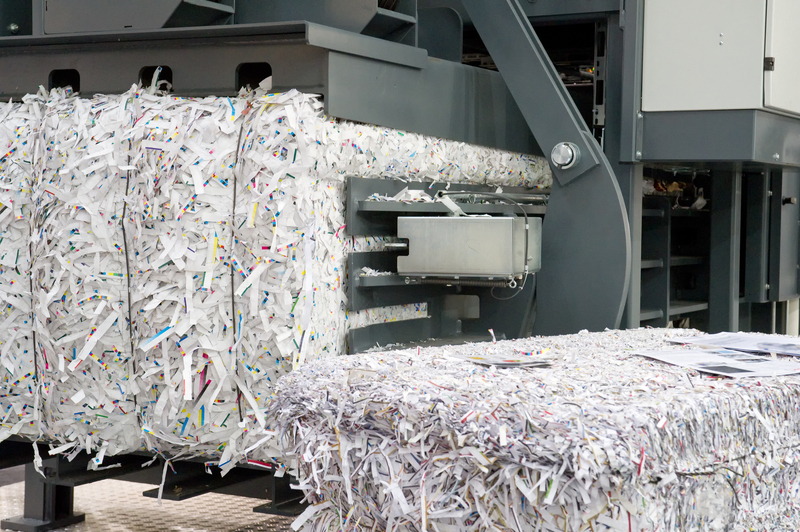
- For high volumes: Horizontal baler with auto-tie. Efficient, consistent bale density (often 350-600 kg).
- For mixed recyclables: Consider a portable compactor for plastics and general waste, to cut lifts.
- Smart sensors: Fill-level monitors for bins and cages--useful for multi-site operations.
Tip: Match bale wire or strapping to your machine; the wrong gauge wastes time and can cause bale failures. Awkward to learn the hard way.
5) Store Bales Safely
- Keep bales off the ground: Pallets or racking to prevent moisture wicking.
- Respect fire guidance: Space stacks, avoid over-height piles, maintain access routes; check insurer and HSE guidance.
- Cover and protect: Wind, rain, and birds can downgrade the fibre quality--yes, really.
6) Procure Collections and Rebates
- Get 3 quotes: Compare price per lift, rebate formulae, bale spec, contamination thresholds, and payment terms.
- Define the spec: EN 643 grade, average bale weight, moisture limits. Request a simple service-level agreement.
- Ask about end destinations: Domestic mill vs export. Transparency builds trust.
7) Train, Nudge, Repeat
- Onboard every staff member: 10-minute demo beats a dusty binder.
- Use micro-feedback: "Great bale density last week--kept contamination at 0.8%." Recognition works.
- Refresh signage: If a bin gets misused, change the sign. Or move the bin. Solve the friction, not the person.
8) Track Data and Improve
- Weigh tickets: Keep digital copies of Waste Transfer Notes (WTNs) and weighbridge data.
- KPIs: Recycling rate %, cost per tonne, revenue per tonne, missed lifts, contamination rate.
- Seasonal adjustments: Add cages or extra lifts before peak periods--don't wait for chaos.
9) Design for Recyclability Upstream
- Choose better packaging: FSC-certified corrugate, water-based inks, minimal lamination.
- OPRL labelling: Help customers recycle correctly. The clearer the label, the cleaner the stream.
- Strip out problem components: Plastic windows, glitter, heavy wax coatings--these reduce fibre recovery.
Moment of honesty: the first time you test alternative packaging, something will go a bit off. A flap too short, a tape that won't stick. Iterate--quickly.
Expert Tips
These ideas come from years of walking warehouses, cafes, construction sites, and shop basements from London to Leeds.
Balers and Bale Quality
- Target density: Ask buyers the sweet spot for your bale grade; higher density often means better rebates but watch labour time.
- Moisture is money: Wet bales can be rejected or downgraded. Store under cover, use drip trays if needed.
- Contamination zero-tolerance: Food, plastic film, glass shards--these can kill a load. Keep food prep and recycling far apart.
Collection Contracts
- Index-link rebates: Tie pricing to a published index if possible; request transparent formulas.
- Missed lifts clause: Service credits for repeated misses keep everyone honest.
- End-destination reporting: Even a simple monthly summary builds ESG credibility.
Operational Wins
- Set a daily "flatten time": One 15-minute window prevents constant interruptions.
- Colour-coded zones: Blue for cardboard, green for plastics. Human brains love patterns.
- Micro-balers for small sites: If space is tight, a compact vertical baler near goods-in can be transformational.
One client in South London added a canopy over their yard. Simple bit of kit. Their OCC rebate went up because bales were finally dry. You'll see why this matters the first time rain hits mid-collection.
Common Mistakes to Avoid
- Mixing cardboard with food waste: A single soggy bag can spoil a bale. Keep streams apart--physically.
- Over-spec'ing equipment: Paying for a horizontal baler when a vertical would do. Start lean; upgrade when data proves demand.
- Underestimating labour: Baling takes time. Plan shifts and set productivity targets.
- No weather protection: Wet board = lost value. Canopies pay for themselves.
- Vague contracts: If it's not written down (thresholds, prices, response times), it's optional.
- Ignoring EPR data: You'll need accurate reporting for packaging placed on the market. Don't scramble at year-end.
Yeah, we've all been there--thinking "we'll sort the contract later." Later is when the bale price suddenly drops.
Case Study or Real-World Example
London E-commerce Warehouse: From Cluttered to Circular
Profile: A fashion e-commerce business in East London, 1,800 m?, dispatching 1,200 parcels/day. Prior setup: loose cardboard in 1,100-litre bins, constant overflows, soggy on rainy days. Staff complained about the forklift beep, beep, beeping around piles of boxes--unsafe and honestly, a bit demoralising.
Intervention (6 weeks):
- Installed a mid-size vertical baler near goods-in; added a canopy and a pallet system for dry storage.
- Created a 10-minute daily "box flatten" slot and trained staff. Clear signs with photos.
- Procured OCC collection with a formal bale spec and index-linked rebate.
- Implemented simple KPIs: recycling rate, bale density, missed lifts.
Results (first 3 months):
- General waste lifts down 38%.
- OCC rebates covered the baler rental and then some.
- Contamination averaged 0.7%. A rainy week pushed to 2.4%, which triggered a quick fix--an added side curtain on the canopy.
- Staff survey: "Back area feels safer and calmer."
It was raining hard outside the day the first full load left on the lorry. The team watched the bales go, tidy and uniform, and someone said, "That's our cardboard actually going somewhere useful." Small moment. Big shift.
Tools, Resources & Recommendations
Hardware
- Vertical balers: Ideal for small-to-medium volumes; look for auto-eject and safe interlocks.
- Horizontal balers: For high volumes; consistent bale weight and density.
- Covered cages and stillages: Simple, low-cost protection from the British drizzle.
- Compactors: Reduce general waste lifts; lockable lids prevent contamination.
- Smart bin sensors: Optimise collection routes and cut missed-lift frustration.
Software and Data
- Weigh ticket apps and digital WTNs: Keep evidence tidy for audits.
- Carbon calculators: Estimate avoided emissions from cardboard recycling (many providers offer tools).
- Papercycle (CPI) & OPRL: Assess recyclability and label packaging correctly for the UK.
Standards and Codes
- EWC code: 15 01 01 for paper and cardboard packaging.
- EN 643: European list of standard grades of paper and board for recycling (OCC grade references).
- ISO 14001: Environmental management systems--handy framework to embed continuous improvement.
Where to Learn More (UK)
- WRAP: Guidance on recycling performance and best practice.
- DEFRA & Environment Agency: Updates on EPR and duty of care.
- HSE: Storage and handling safety; fire and manual handling guidance.
- SEPA/NRW/DAERA: Nation-specific regulations in Scotland, Wales, Northern Ireland.
Law, Compliance or Industry Standards (UK-focused if applicable)
Compliance isn't a box-tick--done right, it's your safety net and your reputation.
Duty of Care and Waste Hierarchy
- Environmental Protection Act 1990 & Waste (England and Wales) Regulations 2011: You must apply the Waste Hierarchy--prevent, reuse, recycle, recover, dispose.
- Separate collection: Paper/cardboard, glass, plastics, and metals should be separately collected where practicable (the "TEEP" test--Technically, Environmentally, and Economically Practicable).
Documentation
- Waste Transfer Notes (WTNs): For each transfer, with EWC codes, SIC code, and a proper description.
- Licensed carriers: Only use registered waste carriers; check registration numbers.
- Storage and safety: HSE guidance on stacking, fire safety, and pedestrian traffic is essential--bales can be heavy and hazardous.
Packaging Producer Responsibility and EPR
- Producer Responsibility Obligations (Packaging Waste) Regulations: Historically required PRNs/PRNs compliance for obligated producers.
- UK Packaging EPR: From 2023, large producers began reporting packaging data; fees are being phased, with evolving timelines. Keep an eye on DEFRA updates.
- OPRL: Use the UK-recognised On-Pack Recycling Label to communicate recyclability clearly.
Devolved Nations
- Wales: Workplace recycling requirements mandate separation of key materials at source.
- Scotland: Separate collections under the Waste (Scotland) Regulations; Zero Waste Scotland guidance supports compliance.
- Northern Ireland: Check DAERA for duty-of-care and local requirements.
If you're unsure, ask your provider to put compliance and data commitments in writing. Clear, simple, auditable.
Checklist
- Map flows from delivery to disposal--note bottlenecks.
- Segregate cardboard clean and dry; cover storage.
- Flatten boxes immediately; remove large tape seams.
- Right-size equipment (vertical or horizontal baler).
- Specify bale grade and density; protect from moisture.
- Procure transparent collections with index-linked terms.
- Train staff; set a daily "flatten time."
- Track WTNs, weights, and contamination.
- Label packaging with OPRL; design for recyclability upstream.
- Review quarterly; adjust for seasonal peaks.
Conclusion with CTA
Revolutionizing cardboard and packaging disposal for a greener future isn't about buying the fanciest kit or plastering sustainability slogans on a wall. It's about steady, thoughtful changes--where each flattened box, each clean bale, each accurate data point moves you toward lower costs, lower carbon, and higher trust. Step by step, week by week. You'll feel the difference in the space you work in--and the stories you can tell.
Get a free quote today and see how much you can save.
One last thought: progress isn't loud. It's the quiet satisfaction of a tidy yard, a fair contract, and a team that knows exactly what to do.
FAQ
What types of cardboard are recyclable in the UK?
Most corrugated cardboard and paperboard are recyclable if clean and dry. Remove large tape seams and void-fill where practical. Plastic-coated, waxed, or heavily soiled card may require separate handling.
Do I need to remove all tape and labels?
No, not every tiny label. Remove heavy tape strips and any large plastic components. Small amounts of tape are usually tolerated by mills.
Can greasy pizza boxes be recycled?
Light grease is often acceptable, but heavy food contamination isn't. Tear off the clean lid for recycling and place the greasy base in food or general waste as advised locally.
How should I store cardboard before collection?
Keep it clean, dry, and under cover. Flatten boxes, use cages or a baler, and store bales on pallets. Moisture downgrades fibre quality and your rebate.
Is a baler worth it for a small business?
Often yes, if you produce consistent volumes. A small vertical baler can reduce bin lifts and earn OCC rebates. Do a quick payback calculation over 6-12 months.
How much is baled cardboard worth?
OCC prices fluctuate with markets and bale quality. Dry, dense bales at the right grade attract better rates. Ask for index-linked pricing and a clear formula.
What is the correct EWC code for cardboard packaging?
Use EWC 15 01 01 for paper and cardboard packaging. Ensure it appears on your Waste Transfer Notes along with accurate descriptions and quantities.
How does UK Packaging EPR affect my business?
Producers must report packaging data (materials, tonnages, recyclability) and will face fees based on environmental impact as EPR phases in. Accurate data capture now avoids headaches later.
What about cartons with plastic windows or laminated finishes?
These can reduce recyclability. Choose simpler mono-material designs where possible and follow OPRL guidance for accurate on-pack instructions.
Are cardboard bales a fire risk?
Bales can pose fire risks if poorly stored. Follow HSE and insurer guidance: maintain separation distances, limit stack heights, keep access routes clear, and control ignition sources.
Can households recycle all delivery boxes kerbside?
Most UK councils collect cardboard at kerbside if it's dry and flattened. Remove polystyrene, plastic film, and non-paper inserts. Check your council's specific rules.
Is composting cardboard a good idea?
Uncoated, plain cardboard can be composted in small amounts as a carbon source, but recycling usually offers greater environmental benefit by displacing virgin fibre.
How do I choose a reliable cardboard recycler?
Seek licensed carriers, transparent pricing, written bale specs, proof of end destinations, and responsive service. Ask for references and sample reports.
What's the simplest way to start improving today?
Flatten everything, keep it dry, relabel bins, and set a daily "box break-down" routine. Then review equipment and collection contracts once your data is flowing.
Does removing plastic mailer bags help?
Absolutely. Keeping plastics out of your OCC keeps contamination low, improves bale value, and reduces rejections at the mill.
Can we recycle printed or coloured cardboard?
Yes, most printed corrugate is recyclable. Avoid metallic foils, glitter, or heavy laminates that can complicate recycling.
What UK standards guide cardboard grades?
EN 643 defines standard grades for paper and board for recycling. Confirm with your buyer which grade your bales must meet.
How often should I review my waste contract?
At least annually, or whenever volumes change significantly (new product lines, seasonal peaks). Use your data to negotiate better terms.
We have very little space--any tips?
Position a compact baler at goods-in, use wall-mounted fold-down tables, and schedule more frequent small collections. A canopy or simple cover makes a big difference in the UK climate.
Is OPRL labelling really worth the effort?
Yes. Clear, standardised labels reduce confusion, improve recycling rates, and demonstrate responsibility--customers notice.